
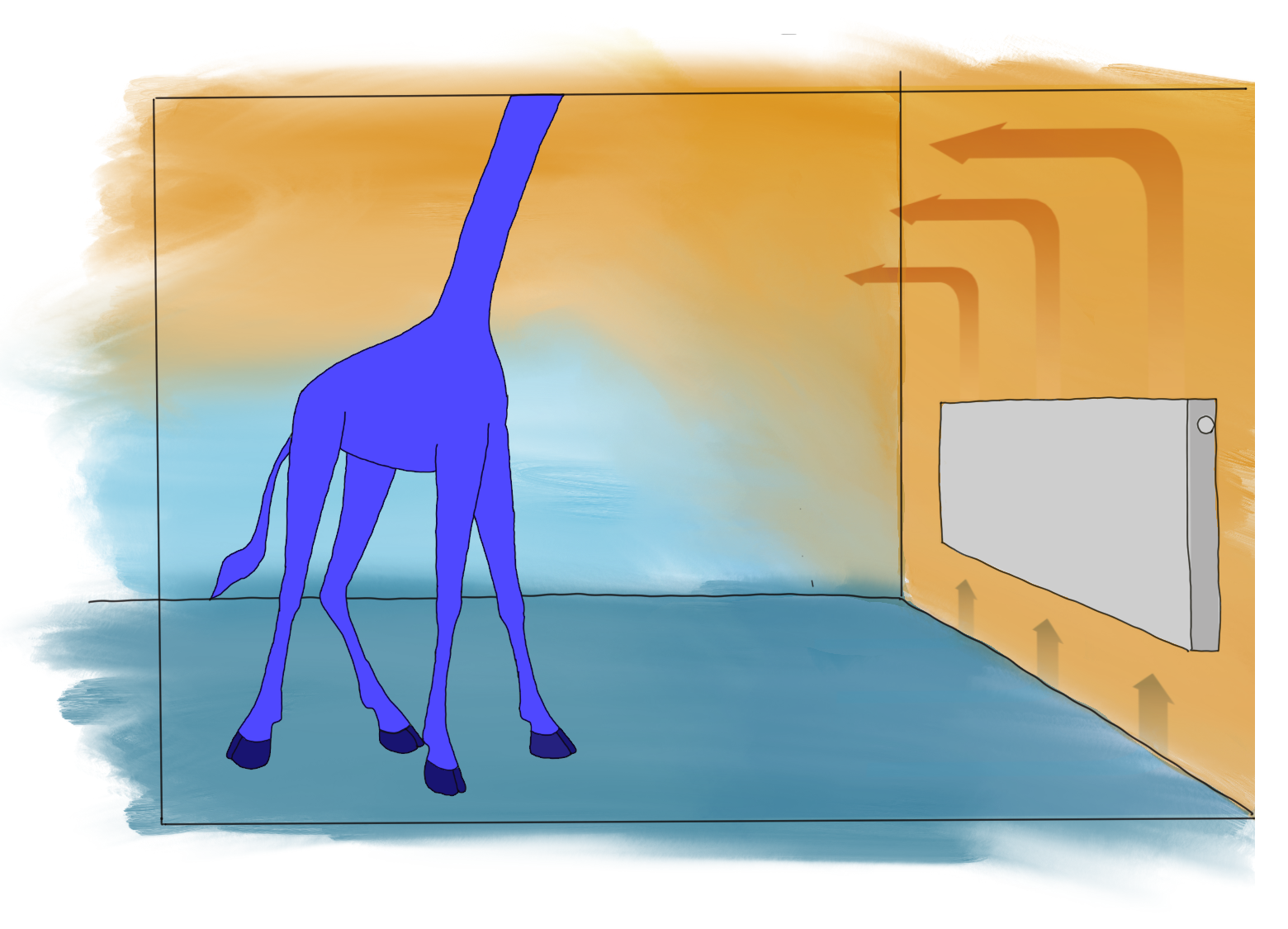
(radiator, electric heater) heats the surrounding air. Heat loss occurs, as walls warm up first while the floor remains cold for a long time.

Utilizes the principle of solar IR radiation released into your room.
Infrared heating utilizes the principle of solar IR radiation released into your room. Another key advantage is the gradual drying of walls, thus preventing excess moisture and mold.
The traditional method of home heating with electric heaters or radiators is becoming a thing of the past. Recently, more people have turned to modern alternatives, such as infrared heating.
Conventional heating involves heating the air in the room, which can be energy-intensive and inefficient. By contrast, infrared heating uses infrared radiation to heat objects and surfaces in the room, meaning the heat is transferred directly to the room's occupants, not the air.
Radiant paintings are installed on the wall and emit warm rays that heat objects and people in the room. This process saves energy, as much less energy is needed to heat the room's objects than the air.
Infrared panels also reduce dust in the room since no air circulation occurs, as with conventional heating. This lowers the risk of allergies and respiratory issues.
An advantage of infrared heating is also its speed. As soon as it is switched on, objects in the room begin to warm, and people feel the warmth without waiting for the entire room to heat. This leads to energy and cost savings.